

What Are the Different Types of Protein Powders and Their Sources?
Share on:

When it comes to protein powders, there’s often confusion about the different types available and where they come from, especially for those embracing plant-rich or vegan diets. With so much conflicting information out there, it’s important to understand the various protein powder options and their sources to make an informed choice for your health. Whether you’re navigating dietary changes, seeking alternative protein sources, or managing specific health conditions like cancer, knowing what’s in your protein powder can help ensure it aligns with your needs.
In this blog, we’ll explore the different types of protein powders and their sources, including both plant-based and animal-derived options. While we will touch on animal protein powders, it’s important to note that we recommend plant-based options for their many health benefits. By the end, you’ll have a clearer understanding of which protein powder might be best suited for you.
If you have been recently diagnosed with cancer, or have a loved one who has been diagnosed with cancer, contact An Oasis of Healing to get a “True Second Opinion” regarding the treatment options available to you for your specific condition and situation.

What are protein powders?
Protein powders are considered dietary supplements, and they provide a concentrated source of protein. As we have explored in our blogs about protein, dietary protein is essential for muscle repair and growth, the structure, function, and regulation of the body’s tissues and organs, and many bodily functions.
Protein powders are not whole foods because they do not occur naturally in nature and need to be processed to be obtained. However, they are extracted from whole food sources, which can be animal, such as cow’s milk, goat’s milk, or eggs, or plant-based sources like peas, soybeans, or brown rice.
How are Protein Powders Made?
Despite their variety, the production process follows similar principles across sources.
Steps in Making Protein Powder
The manufacturing of protein powder is a multi-step process that transforms raw ingredients into the powdered product you see on store shelves. Here’s a breakdown of the key stages:
1. Sourcing Raw Materials
High-quality raw materials are essential to achieving specific product specifications and nutritional profiles1,2. For instance, yellow split peas are used for pea protein, soybeans for soy protein, and dairy milk for whey and casein.
The raw material’s nutritional profile is carefully analyzed, considering protein, carbohydrate, and fat content, amino acid composition, and other factors like vitamins, minerals, digestibility, and potential allergens1,2.
As dietary supplements, protein powders rely on manufacturers to ensure quality and purity. Rigorous testing of raw materials is a critical step in the sourcing phase to ensure that the end product meets high standards of safety and nutrition.
2. Extraction and Isolation
This stage separates the protein from other components such as fats, carbohydrates, fiber, and minerals1,2. The methods vary slightly depending on the source:
- Plant-Based Proteins: The raw material is ground into a fine powder and then treated in a liquid phase to separate unwanted components1,2.
- Animal-Based Proteins: Milk is heated to kill bacteria, strained, and treated with enzymes to isolate the protein (e.g., whey or casein)1,2.
3. Concentration and Purification
The extracted protein is further concentrated and purified to remove impurities and enhance protein content1,2:
- Plant-Based Proteins: Fiber and starch are removed to achieve a higher protein concentration.
- Animal-Based Proteins: Lactose and fats are filtered out, especially in whey protein.
4. Drying and Powdering
The protein concentrate is dried to create a stable, powdered form using techniques like spray drying or freeze-drying:
- Spray Drying involves spraying liquid protein into a hot drying chamber, transforming it into fine powder particles3.
- Freeze-drying freezes the protein, then removes moisture through sublimation, preserving its structure and nutritional value4.
Once dried, the powder is milled or pulverized to achieve the desired texture and solubility, making it easy to mix with liquids.
5. Flavoring and Sweetening (Optional)
To improve taste and palatability, manufacturers often add flavors or sweeteners. Popular flavors include vanilla, chocolate, and strawberry. Sweeteners range from artificial ones like sucralose to natural options like stevia. While optional, this step plays a significant role in consumer appeal, as unflavored protein powders can taste bland or unpleasant1,2.
6. Quality Control
Quality checks ensure the protein powder meets health and safety standards. Testing focuses on protein content, purity, and the absence of contaminants, providing consumers with a safe and effective product1,2,5.
7. Packaging and Labeling
Protein powders are typically packaged in large tubs or resealable pouches, designed to preserve freshness and quality. Labels provide essential information such as ingredients, nutritional content, and allergen warnings. Independent certifications, such as NSF International’s “Certified for Sport” program, can add an extra layer of trust by verifying the product’s purity and safety5.
Why Certification Matters
Remember, it is up to the manufacturer to test their products for quality, and purity, and to ensure safety and proper labeling5. The Food and Drug Administration (FDA) created the Current Good Manufacturing Practices (CGMPs) to help ensure food safety. “CGMP regulations generally address matters including appropriate personal hygiene practices, design and construction of a food plant, and maintenance of plant grounds, plant equipment, sanitary operations, facility sanitation, and production and process controls during the production of food6.” If followed, these practices contribute to minimizing adverse issues; however, compliance is still a concern, and many companies do not test for safety or efficacy before selling their products5.
Organizations like NSF International play a critical role in supplement quality assurance. Their “Certified for Sport” program ensures products meet stringent safety standards, are free from harmful contaminants like mercury and arsenic, and contain only what is listed on the label7. This independent verification gives consumers confidence in the products they use7.
What are the different types of protein powders available on the market?
When it comes to protein powders, most people are familiar with whey protein, a staple in the fitness and nutrition world for decades. However, consumer demand for diverse options—driven by dietary restrictions, ethical considerations, and health preferences—has expanded the market considerably. Today, there’s a wide variety of protein powders derived from both animal and plant sources, each offering unique nutritional benefits.
Let’s explore the most common types of protein powders, their nutritional profiles, and their suitability for different dietary needs.
Plant-Based Protein Powders
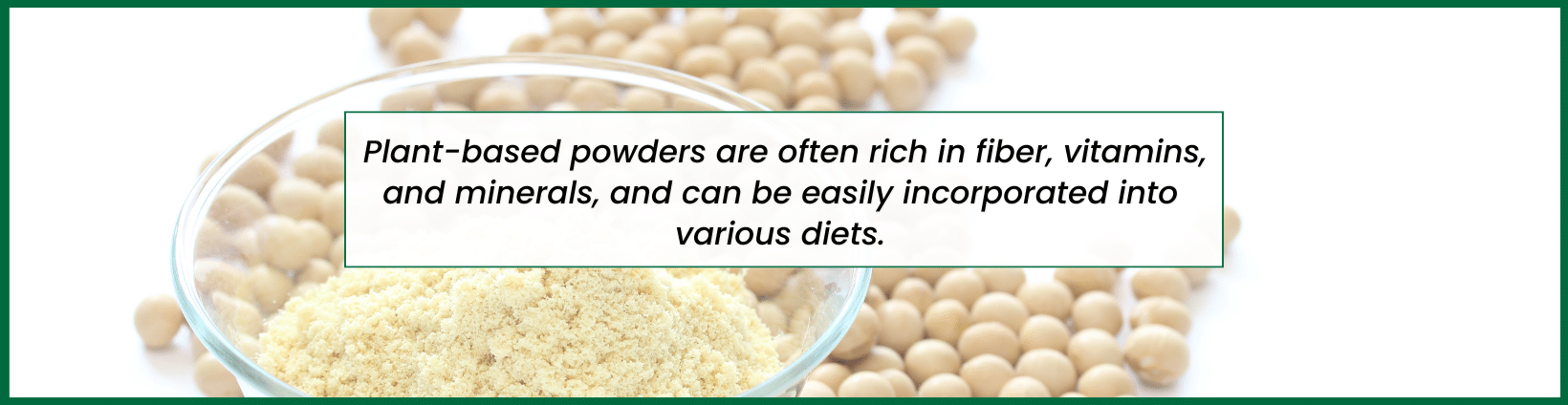
Plant-based protein powders are popular among individuals seeking vegan, vegetarian, or allergen-free alternatives. These powders are often rich in fiber, vitamins, and minerals, and can be easily incorporated into various diets.
Pea Protein8,9
- Source: Yellow split peas (not green peas).
- Amino Acid Profile: Contains all nine essential amino acids, though it is slightly low in methionine. Rich in branched-chain amino acids (BCAAs), which support muscle growth and repair.
- Other Nutrients: A good source of non-heme iron, which can help support energy levels, especially in plant-based diets.
- Characteristics:
- Hypoallergenic and free from common allergens like dairy, soy, and gluten.
- Highly digestible and suitable for individuals with food sensitivities.
Brown Rice Protein8,9
- Source: Brown rice.
- Amino Acid Profile: Contains all nine essential amino acids but is low in lysine, making it an incomplete protein. Often combined with pea protein to enhance its amino acid profile.
- Characteristics:
- Hypoallergenic and easy to digest.
- Free from common allergens, like dairy, soy, and gluten, and suitable for individuals with sensitive stomachs.
Hemp Protein8,9
- Source: Hemp seeds (whole or hulled).
- Amino Acid Profile: Contains all nine essential amino acids but has lower levels of lysine and leucine.
- Other Nutrients:
- Rich in omega-3 and omega-6 essential fatty acids, supporting cardiovascular and skin health.
- Characteristics:
- High in fiber (especially when made using whole seeds), which may promote digestive health.
- Environmentally sustainable, as hemp cultivation requires minimal resources and supports soil health.
Soy Protein8,9
- Source: Soybeans.
- Amino Acid Profile: A complete protein, containing all nine essential amino acids in adequate amounts.
- Other Nutrients: Contains isoflavones, plant compounds with potential health benefits, including supporting bone health and managing menopausal symptoms.
- Characteristics:
- Suitable for various dietary needs.
- Consider choosing organic soy to avoid potential pesticide exposure and genetically modified crops.
Animal-based Protein Powder
Animal-based protein powders are known for their high biological value (BV), meaning they provide all the essential amino acids in proportions that are efficiently utilized by the body.
Whey and Casein Protein8,9
- Source: Cow’s milk (sometimes goat’s milk).
- Amino Acid Profile: Both are complete proteins, containing all nine essential amino acids.
- Types of Whey:
- Whey Protein Concentrate: Contains 70-80% protein, with fats and lactose making up the remainder.
- Whey Protein Isolate: Contains 90% or more protein, with minimal fats and lactose, making it suitable for those with mild lactose intolerance.
- Whey Protein Hydrolysate: A predigested protein that is rapidly absorbed and easier to digest.
- Characteristics:
- Whey: Rapidly absorbed, making it ideal for post-workout recovery.
- Casein: Slowly digested, providing a sustained release of amino acids, which supports overnight muscle repair.
- Environmental Impact: Producing 1 kg of whey protein requires approximately 200 liters of milk, while the same amount of milk yields about 6 kg of casein.
Egg8,9
- Source: Dehydrated egg whites.
- Amino Acid Profile: A complete protein with high levels of leucine, an essential amino acid for muscle protein synthesis.
- Other Nutrients: Low in calories, fat, and carbohydrates.
- Characteristics:
- Ideal for individuals with dairy or soy allergies.
- Not suitable for vegans.
Beef8
- Source: Hydrolyzed beef or beef isolate.
- Amino Acid Profile: Complete protein, rich in collagen and other amino acids that support muscle and joint health.
- Other Nutrients: Typically, low in fat and carbohydrates.
- Characteristics:
- Highly bioavailable and easily digested.
- Suitable for individuals with dairy and soy allergies but not suitable for vegetarians or vegans.
Contact Us to Start Your Healing Journey
While this article discusses both plant-based and animal-based protein powders to provide a comprehensive understanding, at An Oasis of Healing, we do not recommend animal protein for our patients. We educate our patients on nutritional and lifestyle choices that support their healing. Our nutritional philosophy is based on promoting a plant-rich, living foods, vegan diet to best support healing and long-term health. To learn more about why we recommend a plant-based diet and how it supports the healing process, click here.
If you’re looking for personalized cancer treatment or guidance on incorporating nutrition into your healing journey, don’t hesitate to reach out to us. At An Oasis of Healing, we are here to support you in making informed decisions for your health and well-being.
References
- Breaking Down the Steps: How Protein Powder is Made from Start to Finish [Internet]. Revolution Nutrition. Available from: https://revolution-nutrition.com/us/articles/breaking-down-the-steps-how-protein-powder-is-made-from-start-to-finish, accessed Nov 25, 2024.
- Eichel J. How Is Protein Powder Made? [Internet]. Wicked Protein. Feb 17, 2024. https://www.wickedprotein.com/blogs/nutrition/how-is-protein-powder-made, accessed Nov 25, 2024.
- Arpagaus C, John p, Collenberg A, Rütti D. 10 – Nanocapsules formation by nano spray drying. Editor(s): Seid Mahdi Jafari. Nanoencapsulation Technologies for the Food and Nutraceutical Industries. Academic Press. 2017; 346-401. ISBN 9780128094365. https://doi.org/10.1016/B978-0-12-809436-5.00010-0.
- de Castro M, García J. Chapter 2 – Analytical freeze-drying. Editor(s): de Castro M, García J. Techniques and Instrumentation in Analytical Chemistry. Elsevier. 2002 (24); 11-41. ISSN 0167-9244. ISBN 9780444507167. https://doi.org/10.1016/S0167-9244(02)80004-X.
- Gelsomin E. The scoop on protein powder. Harvard Health Blog. Mar 9, 2020. https://www.health.harvard.edu/blog/the-scoop-on-protein-powder-2020030918986, accessed Nov 25, 2024.
- US Food and Drug Administration. Current Good Manufacturing Practices (CGMPs) for Food and Dietary Supplements. Guidance & Regulation (Food and Dietary Supplements). Apr 24, 2024. https://www.fda.gov/food/guidance-regulation-food-and-dietary-supplements/current-good-manufacturing-practices-cgmps-food-and-dietary-supplements, accessed Nov 26, 2024.
- NSF Certified for Sport. About Certified for Sport®. https://www.nsfsport.com/about-us/, accessed Nov 25, 2024.
- Radford S. How Is Protein Powder Made? [Internet]. Supplement Institute. Oct 20, 2024. Available from: https://supplementinstitute.org/protein-fitness/how-is-protein-powder-made/, accessed Nov 25, 2024.
- Woodland R. How protein powder is made [Internet]. LIVE SCIENCE. May 1, 2022. Available from: https://www.livescience.com/how-protein-powder-is-made, accessed Nov 26, 2024.
Recent Posts

Healthy Aging and Cancer Healing: Working With Your Biology, Not Against It

The Hallmarks of Aging: What Cellular Aging Can Teach Us About Cancer

Insulin Potentiation Therapy (IPT): A Kinder, Gentler Form of Chemotherapy

4 Science-Backed Habits for a Healthier Morning Routine

What It Really Means to Get a True Second Opinion

Can Food Shape the Tumor Microenvironment
Understand all of your options.
Talk with us today about integrative cancer care at An Oasis of Healing.
Become Our PatientOur 4 Week ProgramAlternative Cancer Treatment


