
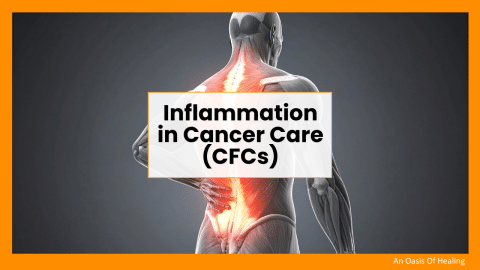
Inflammation is one of the body's most important biological responses. It is part of the immune system's natural defense and repair process, activated when the body experiences injury, cellular stress, or imbalance.
In its acute form, inflammation is protective and necessary. It helps the body isolate stressors, repair tissue, and restore balance.
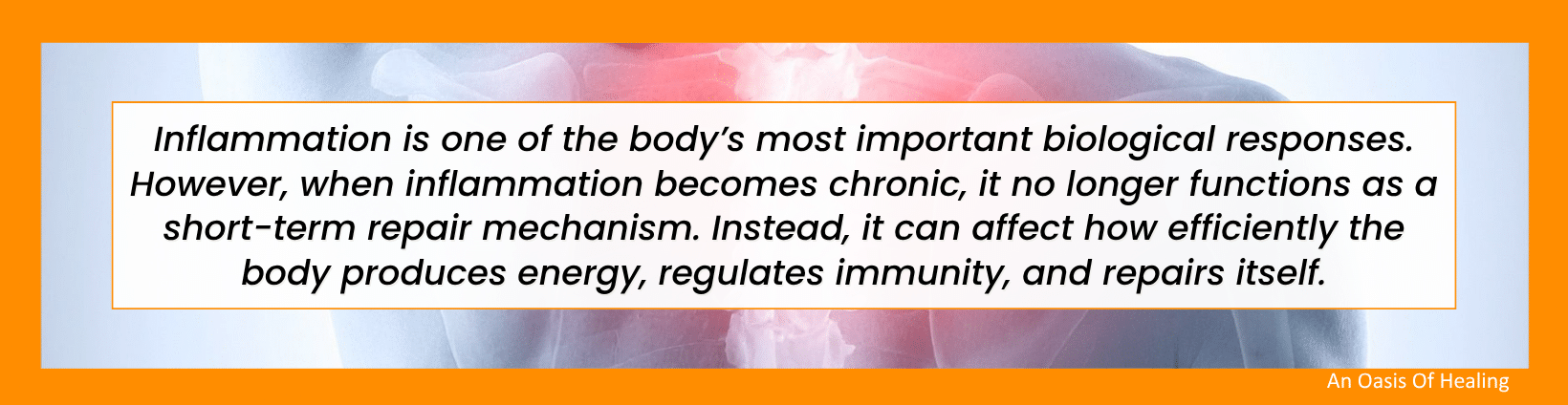
However, when inflammation becomes chronic, it no longer functions as a short-term repair mechanism. Instead, it can become a persistent internal stress state that affects how efficiently the body produces energy, regulates immunity, and repairs itself.
In integrative care, reducing chronic inflammation is considered a foundational part of supporting the body during healing and recovery.
What Inflammation Actually Is
Inflammation is the immune system's signaling response. When the body detects imbalance or cellular stress, it releases immune cells and chemical messengers that initiate repair.
There are two forms:
Acute inflammation
A short-term response that is localized and temporary. This is a normal and essential part of healing.
Chronic inflammation
A long-term, low-grade activation of the immune system where inflammatory signaling remains elevated even when there is no immediate injury or stressor present.
Over time, this ongoing activation can place strain on cellular systems and reduce the body's ability to function efficiently.
Why Chronic Inflammation Matters in Healing
When inflammation becomes persistent, the body remains in a heightened state of activity. While this may be subtle, it can significantly affect internal balance.
Chronic inflammation is associated with:
Increased oxidative stress at the cellular level
Reduced mitochondrial energy production
Disrupted immune regulation
Slower tissue repair and regeneration
Greater overall physiological stress
At a deeper level, inflammation is closely connected to how cells produce energy. When cells are under constant inflammatory signaling, they often operate less efficiently, which can lead to fatigue, reduced resilience, and slower recovery.
What Contributes to Chronic Inflammation
Chronic inflammation is not caused by one single factor. It develops gradually through a combination of lifestyle, environmental, and internal influences, including:
Diets high in processed foods and refined sugar
Chronic emotional or psychological stress
Poor sleep quality
Sedentary patterns of living
Environmental toxin exposure
Gut microbiome imbalance
Reduced efficiency in natural detoxification pathways
Because inflammation is multifactorial, supporting the body requires a comprehensive approach that addresses multiple systems at once.
Foundational Support: Nutrition and Lifestyle
One of the most effective ways to help reduce inflammation is through consistent daily lifestyle choices. While therapies can provide targeted support, the body's baseline inflammatory state is strongly influenced by how it is nourished, how it rests, and how it responds to stress.
At our clinic, we recommend a living food, all plant-based approach focused on whole, unprocessed foods. This provides antioxidants, enzymes, and phytonutrients that support cellular repair while helping reduce internal inflammatory burden.
Alongside nutrition, several key lifestyle factors play a major role in inflammation balance:
Sleep
Sleep is one of the body's most important recovery processes. During deep sleep, the body repairs tissue, regulates immune activity, and restores energy systems.
When sleep is poor or inconsistent, inflammatory activity in the body can increase. Supporting better sleep often comes down to:
Keeping a consistent sleep schedule (go to bed by 10pm at the latest)
Reducing stimulation before bed (no screen time 2 hours before bed)
Creating a calm, dark sleep environment (black out curtains or mask)
Supporting the nervous system to "wind down" in the evening (low lighting, soothing teas and music)
Even small improvements in sleep quality can have a noticeable impact on energy and inflammation balance
Stress and Nervous System Regulation
Chronic stress is one of the strongest drivers of inflammation. When the body stays in a prolonged "fight or flight" state, stress hormones remain elevated and can disrupt immune balance.
Supporting the nervous system helps shift the body back into a "rest and repair" state. This can include:
Slow breathing or grounding exercises
Gentle movement or stretching
Time away from overstimulation
Simple daily moments of pause and rest
The goal is not to eliminate stress completely, but to help the body recover from it more efficiently.
Movement
Gentle, regular movement supports circulation and lymphatic flow, both of which are important for clearing metabolic waste and inflammatory byproducts.
Even low-intensity movement like walking, light yoga, or stretching can help improve energy and support the body's natural regulatory systems.
Hydration and Environment
Proper hydration supports detoxification pathways, circulation, and cellular function. When the body is well hydrated, it is better able to transport nutrients and eliminate waste efficiently.
Environmental factors also matter—reducing exposure to chronic stressors and creating a calmer daily environment can support lower inflammatory load over time.
Why This Matters
These daily foundations work together to influence how the body regulates inflammation. When sleep, stress, movement, and nutrition are supported, the body is more likely to stay in a balanced state where healing processes can function more efficiently.
Therapies That Support Inflammation Reduction
Alongside foundational nutrition and lifestyle support, integrative therapies are used to help the body reduce inflammatory burden, improve oxygen utilization, and support systemic balance. These therapies are not standalone treatments but are used to support the body's natural regulatory systems during healing.
Each modality works differently, but all are focused on one goal: helping the body shift out of chronic inflammatory stress and into a more balanced state.
Oxygenation and Blood Support
One of the core therapies used is EBOO (Extracorporeal Blood Oxygenation and Ozonation).
This therapy circulates blood out of the body through a filter where it is gently exposed to oxygen and/or ozone before being returned to the body. It is used to support:
Improved oxygen utilization at the cellular level
Enhanced circulation and blood flow
Immune system modulation
Reduction of systemic inflammatory load
Support for cellular energy production
Oxygen plays a central role in how cells produce energy. When oxygen utilization is supported, the body is better able to maintain efficient metabolic function, which is closely tied to inflammation regulation.
Antioxidant and Cellular Support Therapies
Inflammation is closely connected to oxidative stress, which is why antioxidant-based therapies are used to support the body's internal balance.
These include:
High-Dose IV Vitamin C
Supports antioxidant defenses and helps regulate oxidative stress that contributes to inflammatory signaling.
IV Curcumin and IV Quercetin
Plant-based compounds that help modulate inflammatory pathways and support immune balance.
Alpha Lipoic Acid and NAC
Support glutathione production, one of the body's most important internal antioxidant systems.
These therapies help the body manage oxidative stress more effectively, which is a key component of reducing inflammation.
Metabolic and Whole-Body Regulation Therapies
Inflammation is also influenced by how cells produce and use energy.
Whole Body Hyperthermia Therapy gently raises core body temperature to stimulate immune activity, improve circulation, and support metabolic function.
IPT Low-Dose Chemotherapy is used in an integrative setting to support more targeted approaches with reduced systemic strain.
DCA (Dichloroacetate) supports cellular metabolism by influencing how cells produce energy, helping shift metabolic patterns toward greater efficiency.
These therapies are designed to support the body's internal regulatory systems rather than overwhelm them.
Detoxification and Immune Support Therapies
The body's ability to process and eliminate waste is essential for inflammation balance.
When detoxification pathways are overburdened, internal stress can increase.
Supportive therapies include:
CaEDTA Chelation Therapy – provides for the removal of heavy metals and toxins
UBI (Ultraviolet Blood Irradiation) – strengthens the immune systems while cleansing the blood of unwanted toxins
Ozone Therapy – supports oxygenation and detox pathways
Phosphatidylcholine Therapy – supports cell membrane integrity and circulation
These therapies help reduce internal burden so the body can maintain a more balanced inflammatory state.
Circulation, Lymphatic, and Nervous System Support
Inflammation is not only biochemical, but it is also influenced by circulation, lymphatic flow, and nervous system regulation.
Supportive therapies include:
PEMF Therapy – supports cellular communication and energy balance
Infrared Sauna – promotes circulation and gentle detoxification through heat
Lymphatic Drainage Therapy – supports the removal of waste and inflammatory by products
EWOT (Exercise With Oxygen Therapy) – enhances oxygen delivery during movement
Acupuncture – supports nervous system regulation and relaxation
Movement therapy – improves circulation and lymphatic flow
These therapies help support the body's natural systems that regulate inflammation on a day-to-day basis.
Why This Whole Approach Matters
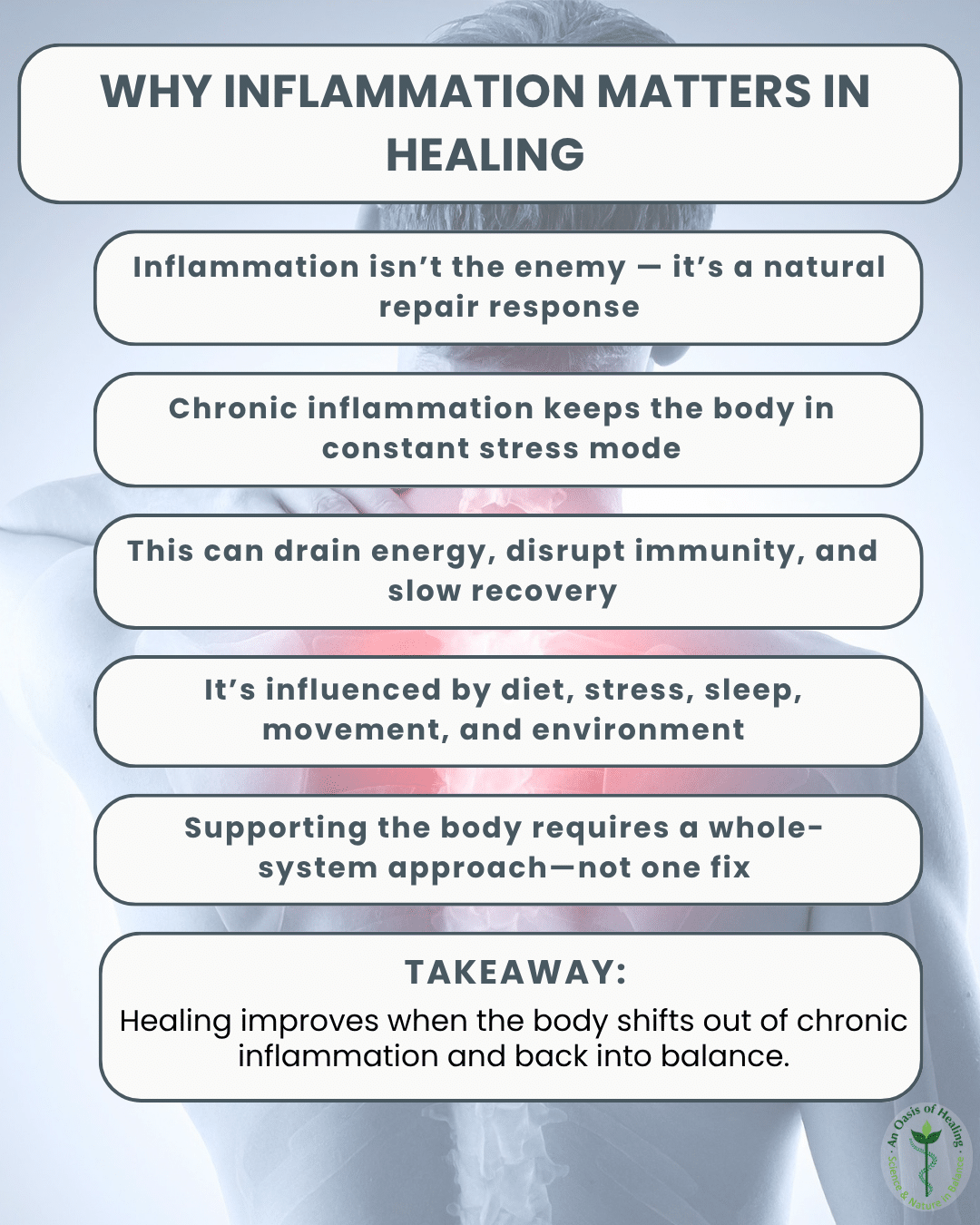
Inflammation is influenced by multiple interconnected systems in the body—metabolic, immune, circulatory, nervous, and digestive.
Because of this complexity, supporting inflammation balance requires a multi-layered approach that includes:
Nutrient-dense raw plant-based nutrition
Stress and nervous system regulation
Movement and circulation support
Detoxification pathways
Targeted integrative therapies
Each component works together to support the body's ability to return to balance.
Final Thoughts
Inflammation is a natural and necessary part of how the body responds to stress and initiates healing. However, when it becomes chronic, it can place ongoing strain on cellular systems and affect overall energy, resilience, and recovery capacity.
Reducing inflammation is not about suppressing the body's natural responses. It is about supporting the systems that allow the body to regulate itself effectively.
Through a combination of living food, plant-based nutrition, lifestyle support, and integrative therapies, the body can be supported in reducing internal stress load and restoring a more balanced internal environment where healing can take place more efficiently.
References
American Cancer Society. (n.d.). Inflammation and cancer.
Coussens, L. M., & Werb, Z. (2002). Inflammation and cancer. Nature, 420(6917), 860–867. https://doi.org/10.1038/nature01322
National Cancer Institute. (n.d.). Inflammation and cancer.
Calder, P. C. (2017). Omega-3 fatty acids and inflammatory processes. Nutrients, 9(7), 683. https://doi.org/10.3390/nu9070683
Ridker, P. M. (2016). From C-reactive protein to interleukin-6 to inflammation as a therapeutic target. New England Journal of Medicine, 375(23), 2255–2260.
Hotamisligil, G. S. (2006). Inflammation and metabolic disorders. Nature, 444(7121), 860–867. https://doi.org/10.1038/nature05485




Understand all of your options.
Talk with us today about integrative cancer care at An Oasis of Healing.
Become Our PatientOur 4 Week ProgramAlternative Cancer Treatment


